
A glow party is the single most requested theme for tweens in Atlanta right now — and for good reason. Done well, it looks genuinely spectacular. Done halfway, it looks like someone put a blacklight in a normal room and called it a party. Here's how to do it right.
What actually glows (and what doesn't)
The single most important thing to understand about blacklight parties: not everything that's white or neon will glow. True UV-reactive glow requires materials that contain optical brighteners or specific phosphors. Here's what reliably glows under blacklights:
- White paper, white foam, and most white fabrics (including most white teepee canvas)
- Neon yellow, neon pink, neon orange, and neon green specifically labeled "UV reactive"
- Tonic water (the quinine glows bright blue — great for drinks)
- White teeth and white eyes (always gets a reaction from kids)
- UV body paint and UV face paint
- Highlighter ink — have kids draw on each other's hands and arms
What often doesn't glow: standard neon-colored party supplies from party stores, most foam or plastic décor items, and regular craft paint.
The lighting setup that makes or breaks it
A glow party needs two types of lighting working together:
- UV/blacklights: These create the glow effect. You need enough coverage — 1 blacklight per 10×10 feet of party space at minimum. Cheap party-store blacklights are weak. Invest in actual UV flood lights (available on Amazon for $20–30 each) or use a service that brings proper UV coverage.
- LED color lights: Electric pink, purple, blue, and green LED strips or bulbs add atmosphere and help the space feel vibrant even in areas the blacklights don't reach as strongly. Smart LED strips (Govee or Philips Hue Play) are excellent here.
The room should be dark enough that the glow effect is dramatic — but not so dark that kids feel uncomfortable. A dim background ambient light in a different color (deep blue or purple) achieves this balance well.
Activities that work for glow parties
- UV body paint station: Set up a table with UV body paint brushes and let kids paint each other under a UV light. Hands, arms, and faces are the most popular spots. This is consistently the highlight of the night.
- Glow ring toss: Standard ring toss but with glow rings — visual and competitive.
- Glow dance party: Clear a space, put on a playlist, turn the UV lights to maximum. Kids in UV-reactive white clothing look incredible dancing under blacklights.
- Highlighter art: Each kid gets a white canvas or paper and highlighter markers to draw under the UV lights. The results look amazing and they have a keepsake to take home.
- Karaoke: A karaoke machine pairs perfectly with glow-party energy for ages 9 and up.
Styling a glow sleepover
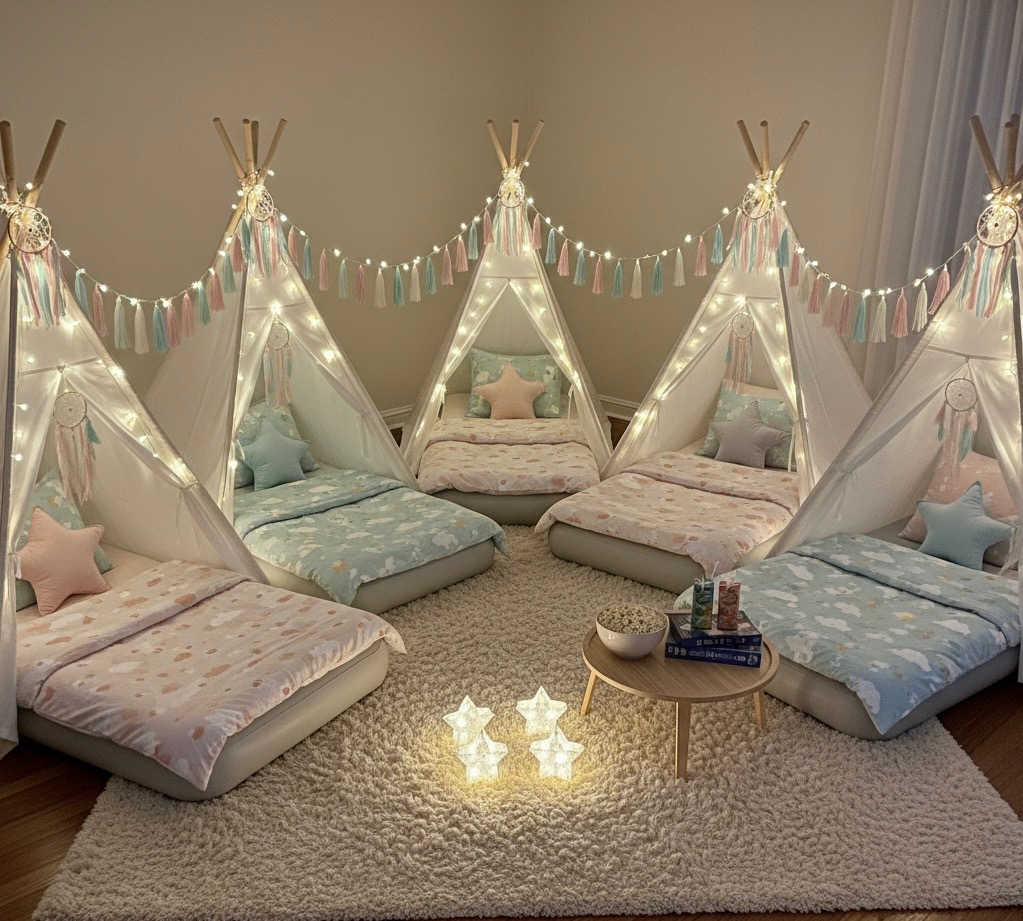
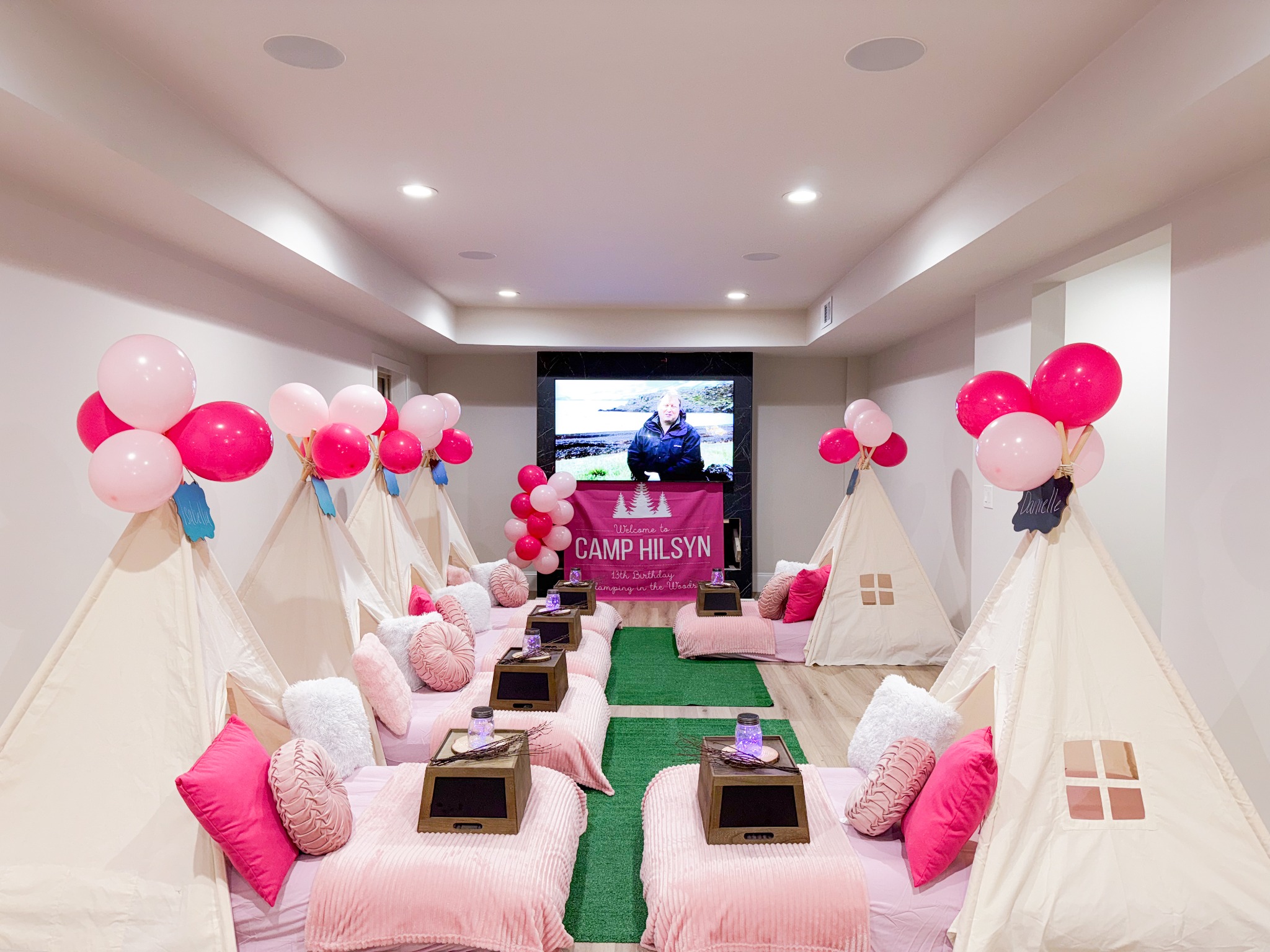
Glow parties and teepee sleepovers are a perfect combination. White teepee canvas glows intensely under UV light — the effect is genuinely spectacular. For a styled glow sleepover:
- White teepees with LED strips in electric pink and purple inside each tent
- UV blacklights positioned to bathe the tent area
- Neon accent pillows and white bedding (which glows bright)
- Individual glow kit per guest — neon bracelets, UV body paint, and a glow-in-the-dark item to keep
What to tell guests to wear
Put on the invitation: "Wear white or neon." White works best of all — kids in white t-shirts and shorts look incredible under UV light. Send a reminder two days before — parents often forget and kids show up in dark-colored clothes that don't glow at all.
Age range
Glow parties work best from age 8 upward. Younger kids (5–7) can be overstimulated by the darkness and intensity, and they often can't fully appreciate the visual effect. The sweet spot is 9–13 — tweens go absolutely wild for a well-executed glow setup.